
8 Ways to Use a Concrete Barrier
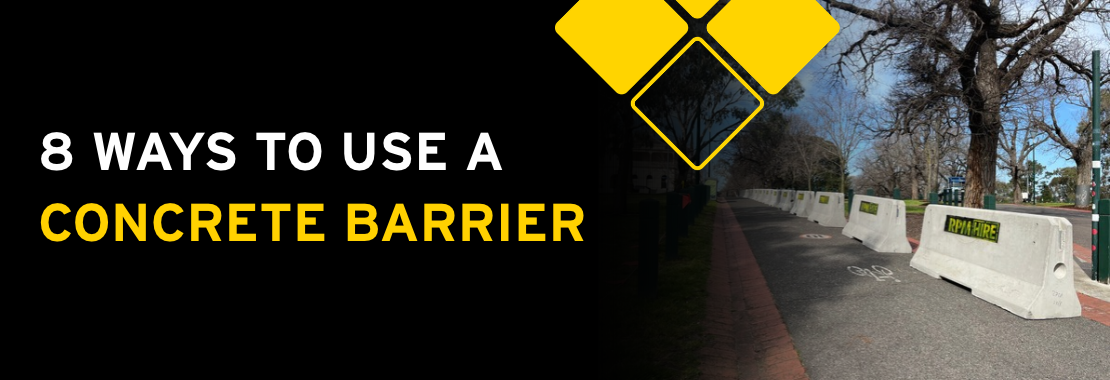
When it comes to protecting people, vehicles and infrastructure, concrete barriers are one of the most reliable solutions available for roadworks and construction environments. Built for durability, stability and high-impact protection, concrete barriers can be used across a wide range of projects – from major infrastructure works to temporary traffic management.
At RPM Hire, our concrete barriers are available for both short- and long-term hire, with options including JJ Hook F-shaped barriers and DELTABLOC DB80 K150 barriers. But what exactly can you use a concrete barrier for? Here are eight common applications.
1. Separate Live Traffic from Work Zones
One of the most common uses for concrete barriers is creating a physical separation between live traffic and active construction areas. This helps protect workers from errant vehicles while providing a clearly defined boundary between the roadway and work zone.
For projects where vehicles are travelling at higher speeds, heavy-duty concrete barriers can provide a robust containment solution.
2. Protect Road Workers
Road workers can be particularly vulnerable when working close to moving traffic. Concrete barriers create a physical layer of protection between workers and vehicles, helping reduce the risk of vehicles entering an active work area.
They can also help protect workers from unexpected intrusions, flying debris and vehicle impacts.
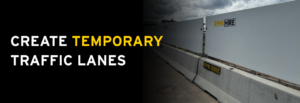
3. Create Temporary Traffic Lanes
Concrete barriers can be configured to create clearly defined traffic lanes around construction sites. Whether traffic needs to be shifted around a work zone or lanes need to be separated, their modular design allows barriers to be arranged to suit changing site conditions.
This makes them particularly useful for large infrastructure and staged construction projects.
4. Protect Pedestrians
Concrete barriers can also be used to separate pedestrians from vehicles and construction activities. By establishing a solid physical boundary, they help create safer, more controlled environments around busy worksites.
For additional protection, RPM Hire also offers barrier screening that can be secured to concrete barriers.
5. Secure Construction Sites
Concrete barriers aren’t limited to roads. They can also be used around construction sites to help control vehicle movements, protect equipment and define restricted areas.
Their weight and stability make them particularly useful where a durable, long-term physical barrier is required.
6. Protect Infrastructure and Assets
Concrete barriers can be positioned to help protect structures, equipment and other valuable infrastructure from vehicle impacts.
For high-risk areas, selecting the appropriate barrier and configuration is important. RPM Hire’s concrete barrier range includes MASH-tested options, with the DELTABLOC DB80 K150 and JJ Hook systems listed as MASH Test Level 3 solutions suitable for roads up to 100 km/h in Victoria and NSW.
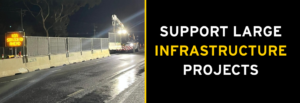
7. Support Large Infrastructure Projects
Major infrastructure projects often involve large work zones, changing traffic conditions and long project timelines. Concrete barriers are well suited to these environments because they can be installed in different configurations and are available for both temporary and longer-term applications.
Their modular design also allows sections to be replaced or layouts adjusted as project requirements change.
8. Add Protection with End Treatments and Screens
Concrete barriers can also form part of a broader safety system. Depending on the project, additional equipment such as crash cushions, end treatments and gawk screens can be incorporated.
RPM Hire offers a range of end treatments, including the SLED, QuadGuard M10, and Smart Crash Cushion, alongside optional barrier screening and gawk screens.
Choosing the Right Concrete Barrier
Not every project has the same requirements. When selecting a concrete barrier, factors such as the site’s speed limit, how long the barrier is required, visibility requirements and whether the barrier needs to be freestanding, pinned or bolted should all be considered.
The right barrier configuration can help create a safer, more controlled work environment while supporting the practical requirements of the project.
Need concrete barriers for your next project? RPM Hire provides concrete barrier hire, delivery, installation and removal, with barrier solutions available across Australia. Contact the RPM Hire team on 1300 479 570 to discuss your project requirements and find the right barrier solution for your site.