
Hostile Vehicle Mitigation: What It Is and Why It Matters for Site Safety
Whether you’re running a major festival, managing a busy construction site or protecting a public precinct, understanding Hostile Vehicle Mitigation Barriers (HVMB), and deploying the right barriers could be the difference between a safe event and a disastrous one. RPM Hire’s temporary hostile vehicle mitigation barriers offer a practical, flexible solution for exactly these situations.
What Is Hostile Vehicle Mitigation?
Hostile vehicle mitigation (HVMB) refers to a set of strategies, systems and physical barriers designed to prevent vehicles from entering areas where they could cause harm. While the term “hostile” might conjure images of deliberate attacks, HVMB addresses a much broader range of risks, including accidental vehicle intrusions, driver error and out-of-control vehicles.
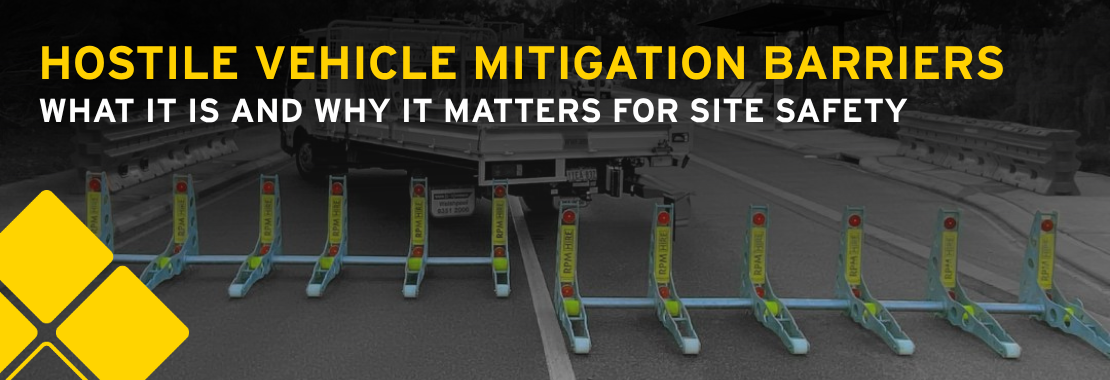
Common HVMB systems include Concrete Jersey Barriers, Water-Filled ArmorZone Barriers, vehicle access control points and temporary hostile vehicle mitigation barriers. The goal is simple: create a physical deterrent that stops a vehicle before it reaches people, property or infrastructure.
Why Hostile Vehicle Mitigation Is Essential for Public Safety
Events, markets, construction zones and city precincts all create situations where pedestrians and vehicles are dangerously close. And while we can’t control every driver, we can control what stands between them and the people we’re responsible for.
The risks go beyond physical harm. If an incident occurs and adequate vehicle mitigation was not in place, organisations can face legal liability and regulatory penalties, reputational damage, insurance complications and potential loss of future event or project permits. In today’s safety-conscious environment, vehicle mitigation planning is a core part of responsible event and site management.
Temporary Hostile Vehicle Mitigation Barriers Explained
Not every site needs a permanent concrete fortress. That’s where temporary hostile vehicle mitigation barriers come in. These are purpose-built physical barriers designed to stop or significantly slow a vehicle attempting to enter a protected zone, without requiring any excavation, construction or long-term infrastructure.
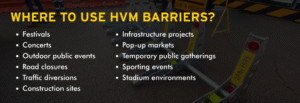
Temporary HVM barriers are commonly deployed for:
- Festivals
- Concerts
- Outdoor public events
- Road closures
- Traffic diversions
- Construction sites
- Infrastructure projects
- Pop-up markets
- Temporary public gatherings
- Sporting events
- Stadium environments
They’re engineered to absorb and redirect impact energy, preventing a vehicle from penetrating the protected area while remaining quick to install and remove.
Temporary vs Permanent Hostile Vehicle Mitigation Solutions
Permanent systems, like fixed bollards and embedded concrete barriers, are ideal for high-risk, long-term locations such as government buildings or busy city pedestrian malls. But for most events and project sites, temporary solutions make far more sense. They deploy faster, offer greater flexibility as your site layout changes, cost significantly less than permanent infrastructure and require no civil works whatsoever.
Key Benefits of Hostile Vehicle Mitigation
Still weighing up whether HVM is worth the investment?
Effective hostile vehicle mitigation delivers pedestrian protection as its primary goal, keeping people safe from vehicle intrusion, whether accidental or intentional. It also supports risk management compliance, as many events and construction projects now require demonstrated vehicle mitigation planning as part of their safety approvals.
Beyond that, the visible presence of physical barriers discourages opportunistic or reckless vehicle entry. Event staff, workers and attendees operate with greater confidence knowing clear physical boundaries are in place. And because temporary HVM solutions can be repositioned and reused across multiple sites, they offer genuine long-term value.
Where is Hostile Vehicle Mitigation Commonly Used?
HVMB aren’t just for major cities or high-security facilities. Across Australia, temporary hostile vehicle mitigation barriers are being used in a wide range of everyday settings. Festivals and concerts rely on them for perimeter protection where vehicle access must be tightly controlled. Construction and roadworks sites use them to protect workers and the public at live traffic interfaces. City centres and outdoor dining precincts deploy them to shield alfresco areas from passing traffic. Government and civic precincts use them to create vehicle exclusion zones, while sporting events use them to manage access around stadium entry points.
How to Plan Hostile Vehicle Mitigation for an Event or Worksite
Effective HVM doesn’t just mean placing barriers wherever there’s space. Start with a thorough risk assessment, identify where vehicles could enter your site, the likely speed of approach and the number of people at risk. Map every vehicle access point and perimeter gap, then determine barrier placement to intercept vehicles before they reach pedestrian areas. Match barrier specifications to the actual threat level and site conditions. RPM Hire can provide you with access to a software platform that can analyse the specific layout and vulnerabilities of a location, considering factors such as vehicle speed, angles of approach, and types of vehicles. This allows for a tailored approach to each unique environment. Work with RPM Hire your HVMB provider who can help with the right products, quantities and layout for your specific setup.

Why Temporary Barrier Hire Is a Practical HVM Solution
For the vast majority of events, construction projects and road closures, purchasing permanent HVM infrastructure simply doesn’t make sense. Hiring barriers gives you the same level of protection with far greater flexibility. With a professional barrier hire service you get equipment that’s maintained, tested and ready to deploy, scalable quantities to match your exact site requirements, expert advice on selection and placement, rapid delivery and installation support, and significant cost savings compared to permanent infrastructure.
Hire Temporary Hostile Vehicle Mitigation Barriers from RPM Hire Today
Is your event, worksite or public space exposed to vehicle intrusion risks?
Don’t wait for an incident to find out. RPM Hire supplies temporary hostile vehicle mitigation barriers to event organisers, construction companies, local councils and site managers across Australia. Our team can help you assess your site, select the right barrier solution and get you set up fast, with no permanent infrastructure required. Explore our HVM barrier solutions or get in touch today to discuss your requirements.
Frequently Asked Questions
What is hostile vehicle mitigation?
Hostile vehicle mitigation (HVM) refers to physical and strategic measures used to prevent vehicles from entering areas where they could harm people or damage property. It covers both deliberate vehicle attacks and accidental intrusions.
When should temporary hostile vehicle mitigation barriers be used?
Whenever there is a risk of vehicle intrusion into a pedestrian or protected zone — particularly at events, construction sites, road closures and any location where permanent infrastructure is not feasible.
What are the benefits of hostile vehicle mitigation barriers?
HVM barriers protect pedestrians, reduce legal and insurance liability, support safety compliance, provide visible deterrence and give operators greater confidence in their safety planning.
How do temporary hostile vehicle mitigation barriers work?
They are engineered to absorb and redirect vehicle impact energy, stopping or slowing a vehicle before it reaches a protected zone. They install without civil works and can be rapidly deployed and repositioned as needed.
Where are hostile vehicle mitigation systems commonly used?
At festivals, concerts, construction zones, roadworks, city centres, outdoor dining precincts, government buildings and sporting venues.